
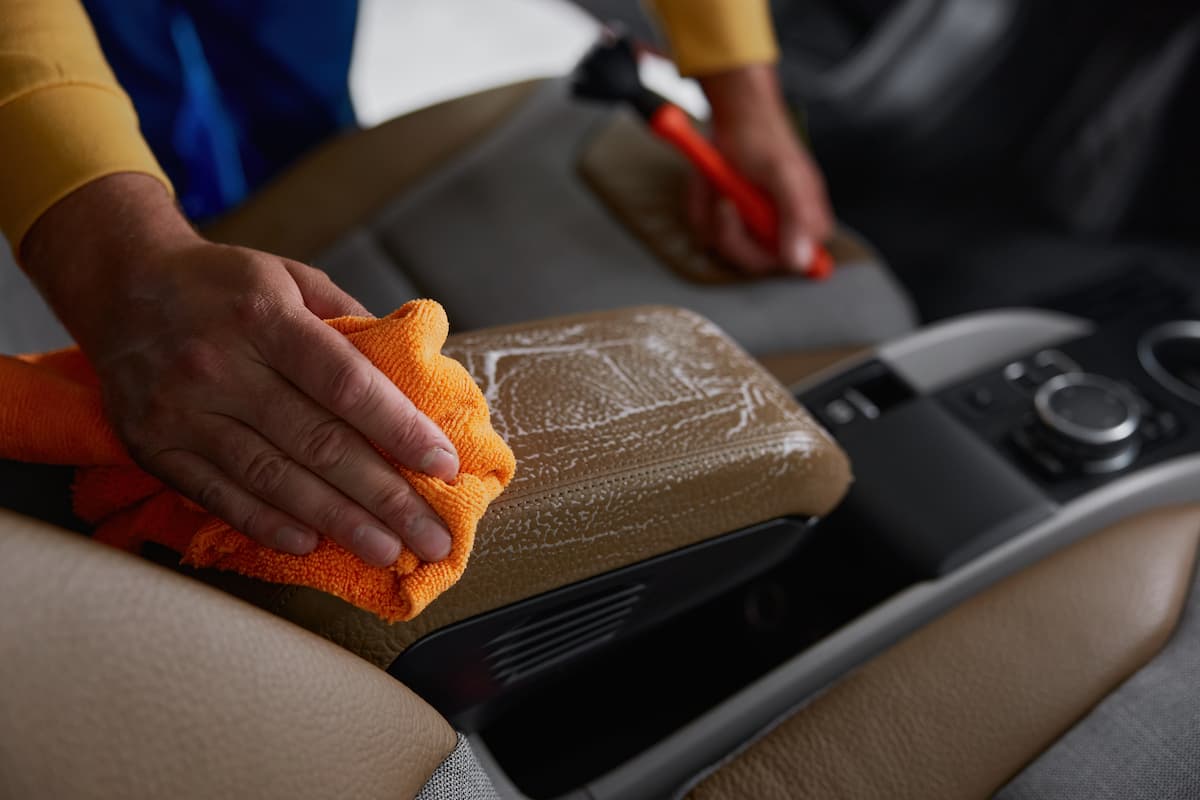
Leather is durable, stylish, and made to last, but only if it’s cared for the right way. Unfortunately, some of the most common “leather care tips” floating around online or passed down as household wisdom are quietly doing serious damage. What starts as a quick clean or conditioning shortcut can strip finishes, dry out the hide, and shorten the life of your furniture, car seats, or commercial upholstery.
In this guide, we’re breaking down the most common leather care myths, explaining why they’re harmful and sharing what actually works when it comes to protecting your investment.
Myth 1: Can You Use Clorox Wipes on Leather? Can You Use Lysol Wipes on Leather?
It’s a question we hear all the time: Can you use Lysol or Clorox wipes on leather? The short answer is no, and the same goes for disinfecting wipes made by other brands.
Disinfecting wipes are designed for hard, non-porous surfaces like countertops, tile, and plastic. Leather is none of those things. It’s a natural material with a protective finish that can be easily damaged by harsh cleaners.
When wipes are used on leather, they don’t just remove dirt. They also break down the finish that protects the surface from moisture, stains, and wear. Over time, this leads to dullness, cracking, stiffness, and uneven color.
Most household wipes contain alcohols, bleach alternatives, surfactants, and fragrances. These chemicals strip away essential oils and weaken the leather’s surface. Even wipes labeled “gentle” or “safe for most surfaces” are not designed for leather.
And if you’re wondering about using Lysol wipes for leather, the answer is the same. These products may disinfect, but they do so at the cost of long-term damage that often requires professional repair to fix.
Myth 2: Using Rubbing Alcohol on Leather for Stains
Rubbing alcohol is another popular DIY solution that causes more harm than good. While it might seem effective for removing ink or sticky residue, rubbing alcohol on leather is extremely aggressive.
Alcohol evaporates quickly, which pulls moisture out of the leather along with it. This dries the hide from the inside out, leading to brittleness, cracking, and permanent discoloration. Even a single application can leave behind a light spot or faded area that’s difficult to blend.
Repeated use is even worse. Over time, alcohol weakens the structure of the leather, making it more susceptible to tearing and surface breakdown. What starts as a small stain can turn into a much bigger – and more expensive – problem.
Myth 3: Any Oil or Conditioner Works on Leather
Another common misconception is that with leather, any oil or conditioner will do. In reality, using the wrong product can be just as damaging as using harsh cleaners.
Household oils like olive oil, coconut oil, or even traditional products like neatsfoot oil are often recommended online. While these oils may temporarily darken leather and make it feel softer, they don’t condition it properly.
These oils can oversaturate the surface, clog pores, attract dirt, and cause uneven darkening. Over time, they break down finishes and leave the leather sticky or greasy. Once absorbed, they’re nearly impossible to remove without professional intervention.
Leather requires products specifically formulated for its chemistry. Professional leather conditioners are pH-balanced to nourish the hide without breaking down protective coatings or altering color. They absorb evenly, maintain flexibility, and help extend the life of the material instead of slowly degrading it.
The Best Leather Care Tips for Protecting Your Investment
Now that we’ve covered what not to do, let’s focus on what actually keeps leather looking good and lasting longer.
1. Use Professional Cleaning Products Instead of DIY Household Solutions
Leather should only be cleaned with products specifically formulated for it. Professional leather cleaners are designed to lift dirt and oils without stripping the protective finish or drying out the hide.
Household solutions like disinfecting wipes, multi-surface sprays, or alcohol-based cleaners may seem convenient, but they gradually weaken leather and cause premature cracking and fading. When in doubt, skip DIY shortcuts and stick to leather-safe products.
2. Dust and Wipe Leather Gently on a Regular Basis
Dust, dirt, and body oils build up faster than most people realize. Gently wiping leather with a soft, dry cloth once a week helps prevent grime from settling into the surface. This simple habit reduces the need for deeper cleaning later and minimizes abrasion that can dull the finish over time.
3. Clean Only When Necessary – and Always Use a Leather-Specific Cleaner
Leather doesn’t need frequent wet cleaning. When spills or visible buildup occur, use a leather-specific cleaner sparingly and follow the product instructions closely. Over-cleaning can be just as damaging as neglect, especially if moisture is allowed to sit on the surface or soak into seams.
4. Condition Leather at the Right Intervals (Not Too Often)
Conditioning replaces the natural oils leather loses over time, helping it stay flexible and resistant to cracking. However, conditioning too frequently can oversaturate the surface and attract dirt. Most leather benefits from conditioning a few times a year, depending on usage and environment.
5. Protect Leather from Heat and Direct Sunlight
Sunlight and heat are two of leather’s biggest enemies. UV exposure dries out the surface and fades color, while heat accelerates cracking. Position furniture away from windows when possible, use shades or UV-filtering window film, and avoid placing leather near vents, fireplaces, or heaters.
6. Call a Professional When Leather Shows Signs of Damage
Once leather becomes stiff, cracked, discolored, or uneven in texture, routine cleaning and conditioning won’t fix the problem. At that point, professional leather repair is the safest way to restore both appearance and structural integrity. Early professional intervention can often prevent minor issues from turning into irreversible damage.
Contact Us at Creative Colors International to Learn More About Our Leather Repair Services
At Creative Colors International, our technicians specialize in professional leather repair, restoration, and maintenance for furniture, automotive interiors, aviation seating, marine upholstery, and commercial spaces. We use proven methods and product-specific solutions that protect leather instead of breaking it down.
If your leather has been damaged by DIY cleaning – or you want to avoid costly mistakes altogether – reach out to us at Creative Colors International today.
Image Source: Nomad_Soul/Shutterstock